
How to Stand Out in a Competitive Industry
Real stories, real auditions, and the choices that made the difference

This article is part of the free tier of Cast Forward — created to help actors build smarter, more sustainable careers. My paid subscribers get full deep-dive articles (every other Saturday), career strategies, and occasional casting notices. If you’re looking for more in-depth insights, personalized strategies, and industry tips, consider joining us!
I thought it would be interesting to write about this because I’ve had many moments in my career where I stood out—whether it was in auditions, callbacks, networking events, or even just being in the right room at the right time.
And the truth is, a lot of the strategies are the same across the board.
Yes, auditions today are often self-tapes or Zoom calls.
But some callbacks still happen in person. Meetings still happen in person.
And even in a self-tape, the way you approach your work still matters.
So everything I’m about to share—you can apply it anywhere.
Quick note before we get into it—this article wasn’t meant to be this long.
I usually keep the free pieces shorter, but once I started writing, I realized how many real stories I had to share.
Even with this length, I had to choose just a few. There are many more.
Preparation Is Not Just About Knowing Your Lines
One of the first things I learned in theater school is simple:
You have to be prepared.
That means:
knowing your lines
being off-book
understanding your character
But more importantly:
You have to come in with options.
You have to prepare different interpretations of the scene.
Because in callbacks especially, you don’t know what they’re going to throw at you.
They might say:
“Try it like this”
“Make it lighter”
“Change the intention”
And if you’ve only practiced one version, you’re stuck repeating yourself.
But if you’ve explored different approaches—even if not exactly what they’re asking—you’re flexible.
And that flexibility is what makes you stand out.
Also—Only List What You Can Actually Do
Another thing I learned in theater school is this:
If you list accents or dialects on your résumé, you need to be able to perform them—and be prepared to use them in your scene in case you’re asked.
Because they can ask you on the spot.
That has happened to me multiple times.
They’ll say:
“Can you do it with this accent?”
And you need to be ready.
Let me take you back and tell you a story that shows why this is so crucial. This was such an important lesson for me.
The Disney Callback — When Things Don’t Go As Expected
This is something that really stayed with me.
I auditioned in person for a Disney TV show and got a callback.
Originally, I performed the scene with a Parisian accent because I was informed to do so.
Now usually, when you’re called back, it’s because they liked what you did.
They want to see it again, maybe with some adjustments.
In my experience, they don’t typically ask you to completely change something like an accent at that stage. It’s usually in your first audition that they would ask such a thing.
So I walked in expecting to refine what I had already done.
But instead, the executives asked last minute:
“Can you do it with a British accent?”
That took me by surprise.
Now, British was not on my résumé—I had removed it for a while.
But I had still prepared my scene in different dialects, just like I was taught in theater school—just not the British one.
So even though I wasn’t expecting that request in a callback, I wasn’t completely unprepared.
However, there was still a challenge.
I had already built my improvisation and delivery around the Parisian rhythm—especially the “R” sound.
So now I had to switch immediately to a British placement, which is very different.
And when you switch that fast, your muscle memory is still holding onto the previous sound.
So yes, I had to adjust in real time.
But I still did it.
They laughed. They loved it. The energy was great.
In the end, they chose someone British.
But that experience taught me something important:
Even in callbacks, things can change.
Especially in television, where decisions shift very quickly.
So don’t assume you’re just going in to repeat what you did.
Be ready for anything.
The LA Audition — Where Preparation Made Me Stand Out
I remember this very clearly.
I had just signed with a new manager in Los Angeles.
He sent me out on my first audition with him.
It was for a series regular.
I had:
12 pages to memorize
a Québécois (French-Canadian) accent to master
and it was for a very well-known casting director
I walked into the room—it was large, almost like a stage.
I stepped up and performed.
I didn’t fumble.
The accent was consistent.
My intentions were clear.
I had built tactics, a climax, and strong choices throughout.
And when I finished, the casting director stood up, shook my hand, and said:
“It’s so wonderful to see someone prepared.”
That moment surprised me.
Not only because she shook my hand, but because in my mind, I thought:
Isn’t everyone prepared?
But the reality is—especially in Los Angeles—many actors are not.
Some haven’t trained deeply.
Some rely only on instinct and good looks.
Some don’t put in that level of work.
So something as simple as being fully prepared can already set you apart.
Making Bold Choices — The Russian Accent Story
There was another audition where I made a strong instinctual choice.
I felt the character should have a Russian accent, even though it wasn’t specified in the scene or character description. It was originally meant to be delivered in a standard American accent.
So I gave them two takes:
one without
one with the Russian accent
They loved it.
They were actually planning to offer me the role.
But in the end, they went with someone local in Mexico (where the film was shooting), who was also a friend of the director, mainly due to budget—they didn’t have to fly her in or cover accommodations.
And interestingly, she ended up doing the Russian accent.
So in a way, my choice influenced the direction of the character.
That’s what standing out does.
It leaves an impression—even if you don’t get the job.
And even though I didn’t book that role, it didn’t end there.
The producer of that project brought me back in to audition for other projects afterward. And in this industry, that impression can carry much further than a single booking.
Improvisation — Where You Can Really Stand Out
Another thing that has helped me stand out many times is improvisation.
Sometimes I add:
extra lines
different interpretations
different reactions that are not in the script
a prop that wasn’t mentioned in the scene
small moments
Not randomly—but intentionally, as an additional take.
And very often, the take that gets selected is the one where I brought something extra.
That’s something that has worked for me consistently.
And it’s not just in the past—it’s something I still do now.
For example, when I auditioned for The Body, I improvised.
Even during the callback, I improvised again—without them asking me to.
I didn’t wait for permission.
I made choices in the moment, based on what felt truthful and aligned with the character.
And that’s something important to understand:
Sometimes, what makes you stand out is not just doing what’s on the page—
but showing them something alive.
Now, of course, this has to be done with intention.
Not to “perform more,” but to bring something that aligns, feels real, and grounded.
Why Improvisation Matters More Than You Think
Improvisation is not just a “nice skill to have.”
It’s essential.
Because:
you might be asked to improvise in an audition
you might be asked to improvise on set
you might need to adapt if another actor forgets a line on stage
you might need to adjust in real time during a performance
And if you don’t have that skill, you freeze.
But if you do—you stay in it.
And staying in it is what keeps the performance alive.
If This Is Not Your Strength
If improvisation is not something you feel comfortable with, I highly recommend taking improv classes.
Because this is not something you “either have or don’t have.”
It’s a skill.
And like any skill, it develops with practice.
Taking improv classes:
trains your instincts
helps you stay present
removes the fear of “getting it wrong”
and allows you to respond instead of overthinking
And that, in itself, will help you stand out.
Because most actors are trying to control everything.
The ones who can stay present, adapt, and create in the moment—
are the ones people remember.
Staying Open — Even When the Role “Isn’t You”
Another way I’ve stood out—and this is very important—is by staying open.
Because a lot of actors do the opposite.
They’ll receive an audition and immediately say things like:
“This is not me.”
“I’m not right for this.”
“They would never cast me in this role.”
And they shut it down before even trying.
You have to eliminate that mindset completely.
Because the truth is:
You don’t actually know what they’re looking for.
Sometimes, they think they know—and they can’t find it.
Sometimes, they change their mind.
Sometimes, one performance shifts their entire vision of the character.
So if you close yourself off too early, you remove yourself from opportunities that could have been yours.
The 60-Year-Old Role — Where Openness Made Me Stand Out
I was recently asked to audition for a character who was 60 years old.
I’m not 60.
And the casting director even acknowledged that. He said:
“I know this is not your age range, but I really want you to tape for this.”
Now, this is where a lot of actors would say:
“This doesn’t make sense. This is not for me.”
But I didn’t do that.
I stayed open.
I approached it seriously. I didn’t treat it like a throwaway audition.
I did the work. I built the character. I committed to it fully.
And the director loved it.
I got called back.
And after the callback, they told me something very interesting:
They were now trying to decide whether to:
change the age of the character
or keep it as originally written
Because they hadn’t found the right person—and I was the only one who captured the essence of what they were looking for.
That’s powerful.
I didn’t fit the role on paper.
But I fit the role in execution.
And that’s what made me stand out.
The Real Lesson
You cannot approach this industry with a fixed idea of where you belong.
Because the industry itself is constantly shifting.
If you decide for them that you’re not right—you lose before you even start.
But if you stay open, take the opportunity seriously, and bring your full work into it…
You give them a reason to rethink their choices.
And that’s where real opportunities come from.
Professionalism and Kindness Matter
Another thing that helps you stand out—and people underestimate this—is how you treat others.
Always be:
professional
kind
diplomatic
Even if the energy feels off.
People remember that.
And this industry is smaller than you think.
Presentation — You Never Know Who’s Watching
I always try to be well put together when I go to:
meetings
events
networking situations
Because first impressions matter. Let me take you back.
I remember being invited on set for The Score, starring Marlon Brando, Edward Norton, and Robert De Niro, by my mentor at the time.
He told me that someone would call me, take me on set, and give me the chance to learn how things work on a major Hollywood film production. I’d also get the opportunity to meet industry professionals and participate in background work. At the time, I had only done theater and non-union projects, so this was a huge step. Ironically, it was around this exact time of the year.
I was very young at the time.
I wore a beautiful dress from a local designer that I had saved up for.
The first assistant director noticed it immediately and said his girlfriend had wanted that same dress.
Then he walked away, spoke to the director, came back, and said:
“We’re going to give you a line in the scene.”
That became my first experience speaking in a major Hollywood film.
The scene ended up being cut—but the lesson stayed with me.
You never know what one moment, one impression, or one detail can lead to.
Another way I’ve stood out—and this has happened to me more than once—is through how I present myself.
And I don’t mean this in a superficial way.
I mean:
how you carry yourself
how you speak
your energy
your presence in a room
Because some people notice that before you even speak.
The Festival Event — When Presence Opens the Door
I remember being at an event in Montreal in 2009—it was called the Pan African Film Festival.
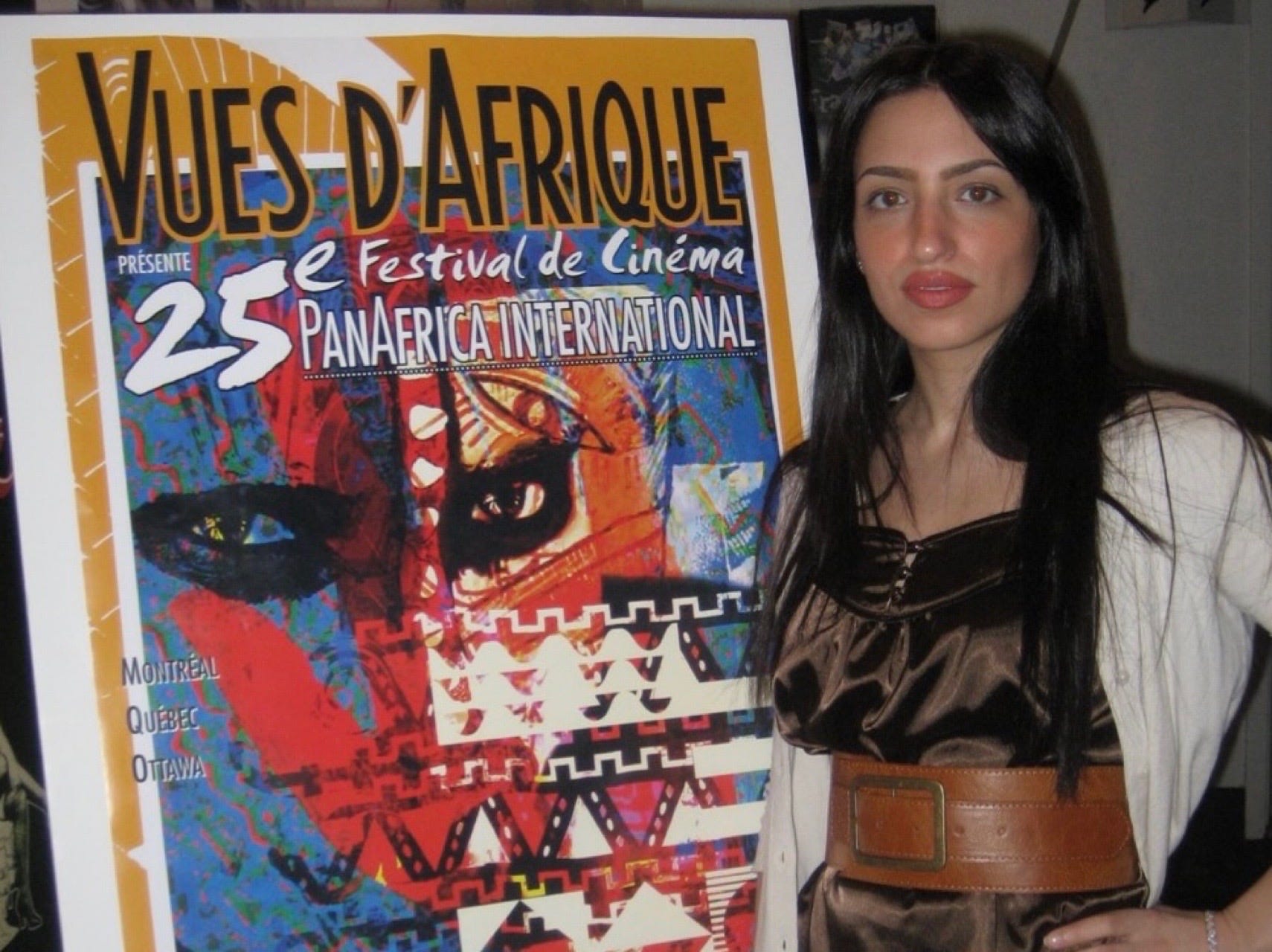
I was there, well-dressed, very presentable, just having a conversation at a table with someone in the industry. At the time, I knew how to speak the business language. So while I was speaking to this person about a film I worked on, I knew how to position myself.
And suddenly, a woman approached.
At first, I assumed she was coming to speak to the person I was with.
But she came directly to me.
She introduced herself and asked if I would be interested in coming on her radio show for an interview.
She told me:
“You stood out. Your energy, the way you carry yourself—I noticed you. I also overheard you talking about your project Heliopolis, and I really loved that film.”
Heliopolis was an Egyptian film I was part of that had gained a lot of traction.
But the point is:
I didn’t go there trying to “get something.”
I showed up with the right energy—open, present, and without expectations. I was intentional in how I carried myself, how I dressed, and how I spoke—and that’s what made me stand out and created the opportunity.

The Montreal Event — When Positioning Changes How You’re Treated
Another moment that really stayed with me happened at an event in Montreal—YES Entrepreneurship Conference event in 2009.
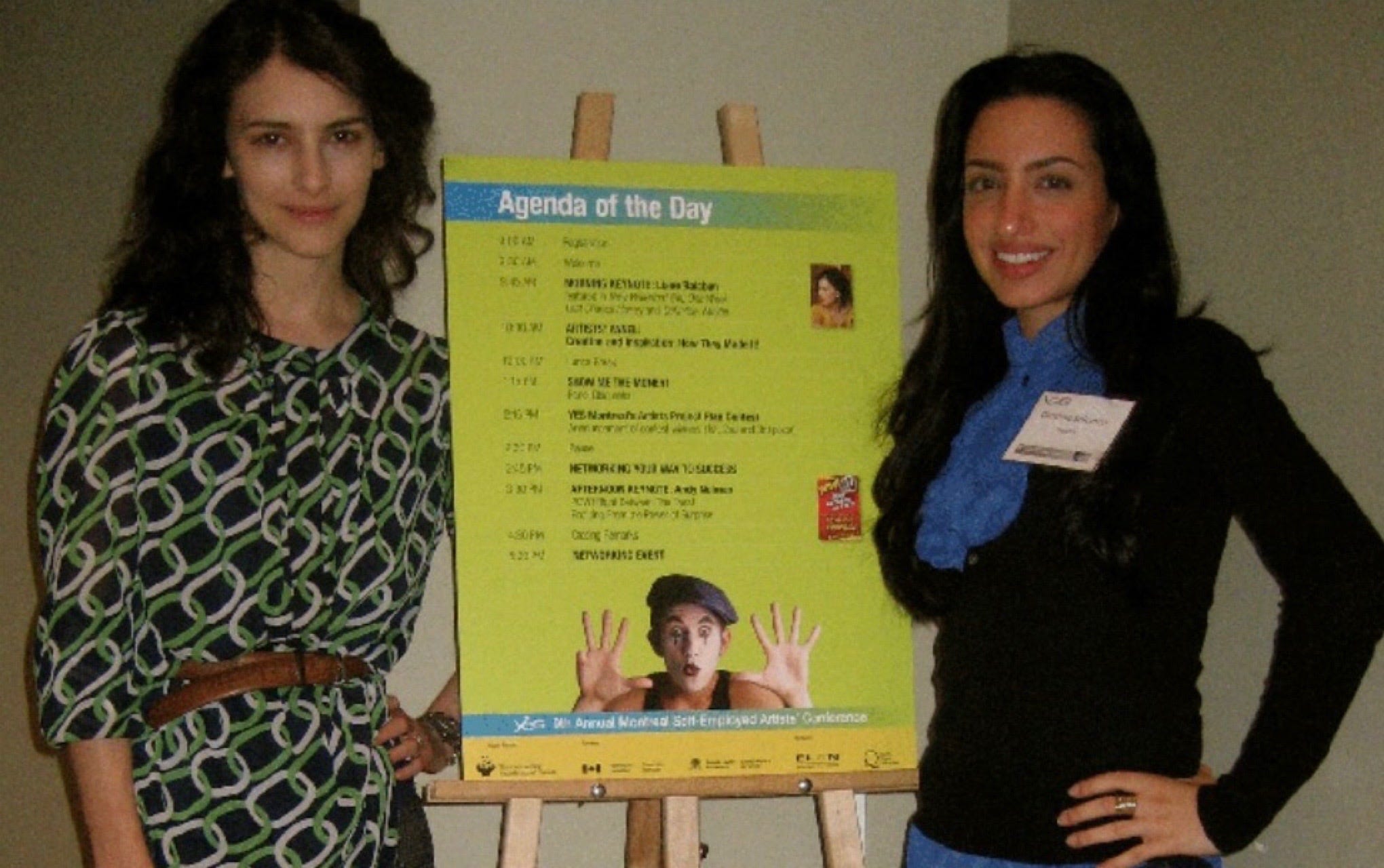
I had just come back from Egypt after working there for two years.
And one thing I learned during that time—especially in Egypt, which is often called the “Hollywood of the Middle East”—is the importance of always being presentable.
It’s something we’re taught culturally as well, but over there, it’s taken to another level.
So I showed up to this event very intentionally.
I was dressed professionally.
Most people were in casual attire, except for the established industry professionals.
I was in something much more polished as you can see in the picture above. I also carried myself like an established actor.
There was a panel happening, and a well-known Montreal casting director was there.
After the panel, people were going up to introduce themselves.
I observed something very interesting.
When she was speaking to others, the interaction was very normal.
But when I approached her, there was a shift.
There was a different level of attention.
Almost a kind of respect… even a slight shyness in how she responded.
It was because of:
how I presented myself
how I was dressed
how I carried myself
and how I spoke
I introduced myself simply but strategically.
Something along the lines of:
“Hi, I’m Christine Solomon. I’m a Canadian-Egyptian actor. I worked on a couple of films that are currently circulating in major international film festivals.”
It wasn’t long. It wasn’t complicated.
But it was clear. It was positioned. It was intentional.
I gave her my business card.
Then that introduction sparked a conversation with the casting director. It intrigued her, and she started asking me questions, which led to a discussion about the film festivals those projects were circulating in.
And within a short period of time—I was called in for an audition.
And I booked it.
That project became Fakers, an HBO Canada TV movie.
The Real Takeaway
This is something a lot of actors underestimate.
They think:
“It’s just about the audition.”
But it’s not.
You are being perceived the moment you enter a space.
Before you speak.
Before you perform.
Before you even introduce yourself.
And that perception influences:
how people talk to you
how seriously they take you
and whether they remember you
You don’t have to wait to be established to carry yourself like you are.
Sometimes, that’s exactly what creates the opportunity in the first place.
Versatility — Be Ready for Anything
Another thing that has helped me stand out is that I’ve studied many different techniques and styles of performance.
And that matters more than people think.
Because sometimes, in an audition, they will ask you on the spot to do something completely different from what you prepared.
I remember this very clearly from a theater production audition.
I went in, I did my piece, and then they asked me:
“What else do you have?” “Do you have something more in the style of SNL? Something more comedic in that way?”
So I gave them another monologue.
Because I had already prepared different types of material.
I didn’t have to think, “What can I do?” or panic in the moment.
I already had something ready that fit that tone.
And I performed it right there.
That’s what got me the role.
That’s what being prepared really means.
Not just being ready for what you expect—but being ready for what they might ask you that you didn’t plan for.
Because those moments happen.
And definitely my theater school training prepared me for that in a very deep way.
When you go through that kind of training, you’re not just learning one technique.
You’re exposed to:
multiple styles of performance
different approaches to character work
a wide range of material
You memorize so many pieces.
You perform so many scenes.
You watch so many other actors work.
You go through improvisation classes where you’re constantly creating new moments, new characters, new situations.
So over time, you build something very valuable:
You become like a bank of performances, techniques, and instincts.
When something is asked of you in the room, you don’t start from zero.
You reach into that bank and think:
“I have something for this.”
It’s very similar to someone going to culinary school.
They’ve cooked so many dishes, learned so many techniques, worked with so many ingredients.
So when they enter a competition, the ones who thrive are usually the ones who have that depth of training and experience.
It’s the same thing here.
That training prepared me for the real world in a way I didn’t fully understand at the time—but I came to see it very clearly.
When you’ve done the work, you can access it instantly.
And that’s what allows you to stay calm, adapt quickly, and stand out when it matters.
The Group Audition — What “Standing Out” Actually Looks Like
This was one of the most interesting audition experiences I’ve had.
I was in Los Angeles, auditioning for a production company that was building a roster of actors to work with on future projects.
I remember walking into their office—it was a top-floor space in a well-known building on Sunset Boulevard in West Hollywood. I passed by it all the time—it’s one of those places you immediately recognize.
They had clearly invested in what they were building.
And that already changes the energy when you walk into a room like that.
We were all in a conference room.
All the actors were sitting down, watching each other perform.
And they gave us a short piece—a cold read.
Now, the way the scene was written, it naturally led actors to play it one way:
Angry. Loud. Explosive.
And one by one, that’s exactly what everyone did.
They were:
raising their voices
lashing out
pushing the energy outward
I even remember one actor physically trying to throw a chair in the scene.
So I sat there, watching all of this, and I thought:
Why is everyone going for the obvious choice? And if I do the same thing… I disappear.
In theater school, we were trained not to do that.
To explore different ways of expressing the same emotion—especially anger.
So I knew in that moment: if I follow the same instinct as everyone else, I disappear.
So I made a choice.
Not the “opposite” in the sense of removing anger—but in how the anger was expressed.
Instead of being loud and explosive…
I played it:
grounded
contained
controlled
The anger was still there.
But instead of shouting the line, I lowered my voice.
I almost whispered it.
And that completely shifted the energy.
It made people lean in instead of pulling back.
When I finished, the owner of the company was clearly impressed.
He gave feedback in front of everyone—spoke about the performance, the choices, the control.
Then he turned to his assistant and said:
“Take her. Go over the contract with her.”
The assistant took me aside, explained everything about the company, how it works, what they were building.
And that’s when I signed with them.
That’s what standing out actually is.
Not doing more than everyone else—but making a specific, intentional choice that shifts the room.
Your Tools Matter — More Than You Think
Your headshot alone can open doors.
I remember standing in line at auditions in Los Angeles, and actors would ask me:
“Who shot your headshot?”
That matters.
The same goes for:
dialect reels
voiceover demos
language skills reels
These are assets that support your positioning.
Learn the Language of the Business
Another thing that helps actors stand out—and this is a big one—is understanding the business side of the industry.
More specifically:
Knowing how to speak the language of the business.
So many times, I meet actors who don’t understand this.
They don’t know how to talk business.
They don’t know how to position themselves in a professional conversation.
And that creates a disconnect.
Because the people making decisions—producers, executives, casting directors—they are not speaking in “actor language.”
They are speaking in:
value
marketability
audience
packaging
strategy
At the end of the day:
This is a business.
And if you don’t understand how to communicate within that framework, you’re limiting how seriously you’re taken.
Why This is More Crucial Than You Think
You can be incredibly talented.
But if you:
can’t articulate your value
don’t understand how projects are positioned
don’t know how to speak about your work in a business context
…you’re missing a huge part of the equation.
Because decisions are not made on talent alone.
They’re made on:
fit
value
and how you contribute to the bigger picture
If You Haven’t Learned This Yet
This is something you can learn.
And it’s something I’ve written about before in more detail.
So if you haven’t read that article yet, I highly recommend going back and reading it.
Because once you understand how to speak the language of the business…
You stop sounding like someone asking for an opportunity—
and start sounding like someone who belongs in the room.

Have Your Sh*t Together — On and Off Camera
Another thing that has helped me stand out is having my sh*t together.
And I don’t just mean being prepared for an audition.
I mean:
being organized
being disciplined
being intentional with how you run your career
I’m very structured and ruthless with my schedule.
With my calendar.
With my craft.
With the business side of what I do.
Because acting is not just an art—it’s a business.
And if you’re not treating it that way, you’re already behind.
You Can’t Be Random and Expect Results
I’m very aware of:
what I’m working on
what I need to improve
who I need to reach out to
what relationships I need to maintain
I cultivate relationships.
I nurture existing ones.
I build new ones.
And I do it consistently—not only when I “need something.”
That alone makes a difference.
Because people can feel when you only show up when it benefits you.
Your Brand Is Not Optional
Another thing that actors overlook is their brand.
As an actor:
You are your brand.
Your:
voice
likeness
style of acting
presence
But also:
your social media
your visibility
your press
how you present yourself publicly
If you’ve taken the time to:
build an audience
be featured in the press
do interviews
create strong materials
That adds weight to who you are.
Your Materials Matter
Having:
a strong pitch deck
a press kit
a well-packaged presentation of your work
…all of that helps you stand out.
Because now, you’re not just “an actor.”
You’re someone who:
understands the industry
knows how to position themselves
and brings value beyond just the performance
The Reality
Talent gets you in the room.
Everything else keeps you in the conversation.
And the actors who understand that—
and actually put in the work on both sides—
are the ones who move forward.
Final Thought
Standing out is not one thing.
It’s:
preparation
flexibility
bold choices
professionalism
and consistency
You don’t stand out by trying to be different.
You stand out by being intentional.
And when you do that consistently—
People remember you.
Now, these are just a few of the ways to stand out.
There’s a whole other layer to this—one that goes deeper into strategy, positioning, and how to actually build momentum over time.
And that’s something I share on the other side.
Everything I’ve shared here comes from structure, preparation, and consistent execution over time.
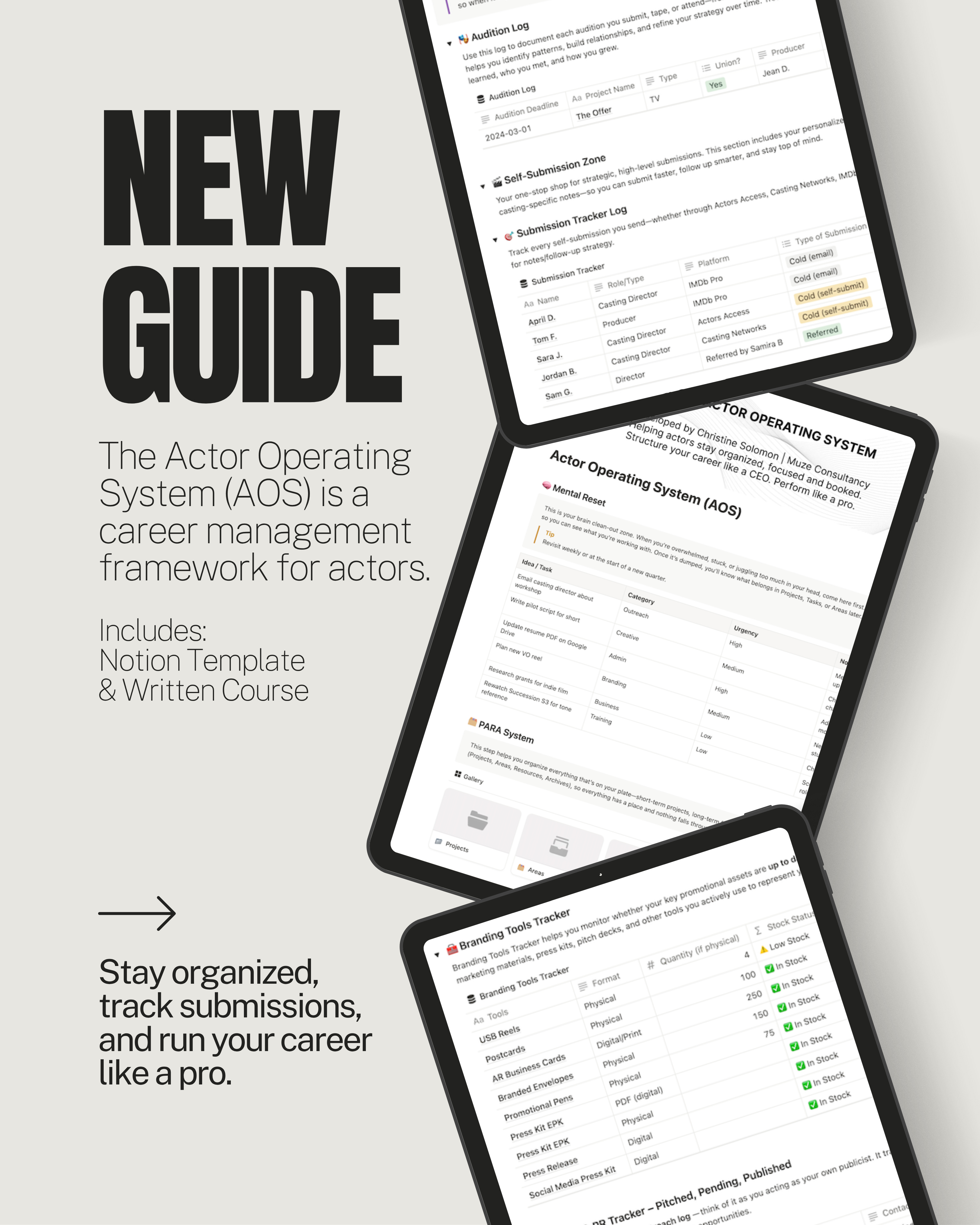
That’s exactly what I built into the Actor Operating System—a career management framework designed to help you stay organized, track your submissions, and manage your career like a professional, so you’re not guessing what to do next, but actually applying it consistently in real situations like these.
Coming Up Next on Cast Forward
Here’s what’s on the way:
Substack TV: What This New Platform Shift Means for Actors (And How to Use It Strategically)
Financial Growth: How to Create Multiple Income Streams as an Actor
Mastering the First 10 Seconds of an Audition
The Essential Acting Gadgets (and Apps) Every Performer Needs
Questions You Should Ask Before Taking a Workshop
🔜Coming Up Next For VIPs
A verified list of casting directors with active casting notices, newsletters, and/or submission forms
Verified industry contact lists. We are starting with:
1. Theaters (open for general auditions)
2. Casting Directors
3. Photographers
4. Demo Reel Editors
5. Headshot Reproduction Labs
How SAG-AFTRA vouchers, ACTRA credits, and other union pathways really work — clearing up the confusion once and for all.
Hello Substack community, tune in over the coming days, I’ll be dropping several new reads :
The glare - a popular, busy bar comes up with an innovative and hilarious way to show undesirable guests to the door.
Just drive - a loyal and hard-working chauffer gets his just desserts against his wealthy boss. Find out who ends up in the driver’s seat in this story.
Personal space - a funny story about a former client of mine that had no concept of personal space.
Meeting Mickey Mouse - travel back to when my wife and I took our older son to Walt Disney World in Florida when he was very little. It was a long, hot day, but we finally met that famous cartoon mouse.
Abe & Andy, (vol. 13) - A fictional pairing of President Abraham Lincoln and business mogul Andrew Carnegie. It didn’t end at Ford’s Theatre in Washington, D.C. in April of 1865. A warm friendship that changes America for decades, up to the present day. The constant excitement, the walk-on characters of other major historical figures, and the humor will keep you coming back for more.
Abe & Andy, (vol. 14) - A fictional pairing of President Abraham Lincoln and business mogul Andrew Carnegie. It didn’t end at Ford’s Theatre in Washington, D.C. in April of 1865. A warm friendship that changes America for decades, up to the present day. The constant excitement, the walk-on characters of other major historical figures, and the humor will keep you coming back for more.
And now, back to you (vol. 3) - Series fiction about television reporter Stephanie Smiles. She is not who she seems, and her misdeeds change tv news reporting in ways that no one could have foreseen. There is shocking drama in each installment.
And now, back to you (vol. 4) - Series fiction about television reporter Stephanie Smiles. She is not who she seems, and her misdeeds change tv news reporting in ways that no one could have foreseen. There is shocking drama in each installment.
I’m really enjoying entertaining you. I’m not your coach, your consultant, your guru, or your life guide here on Substack. I’m not here to pretend, and I take my writing very seriously. I’m just a regular guy with lots of stories you’ll enjoy. I’m not here to sell you packages, or systems, or seek expensive and unnecessary founding pledges, or squeeze you in any way. I’m not looking to land on your busy calendar with regular video meetings and webinars. I’m merely a storyteller, and no more. My stories cover all interest types. Humor, drama, spooky, irony, nostalgia, and some series fiction. They are easy reads only 7-8 mins. long, you can easily fit a few reads into your day. My writing is prolific, and I am regular. I’ve already dropped 262 short-reads in only 15 months. You can count on me. While many of my stories are free, you can have it all for only $50.00 / per year. For the price of only two gas station coffees per month, you can read my extensive and growing portfolio. Read any 3-4 stories and you’ll be hooked. Tell everyone, and restack if you like what you’re reading.
Come along.
@the smell of smoke